
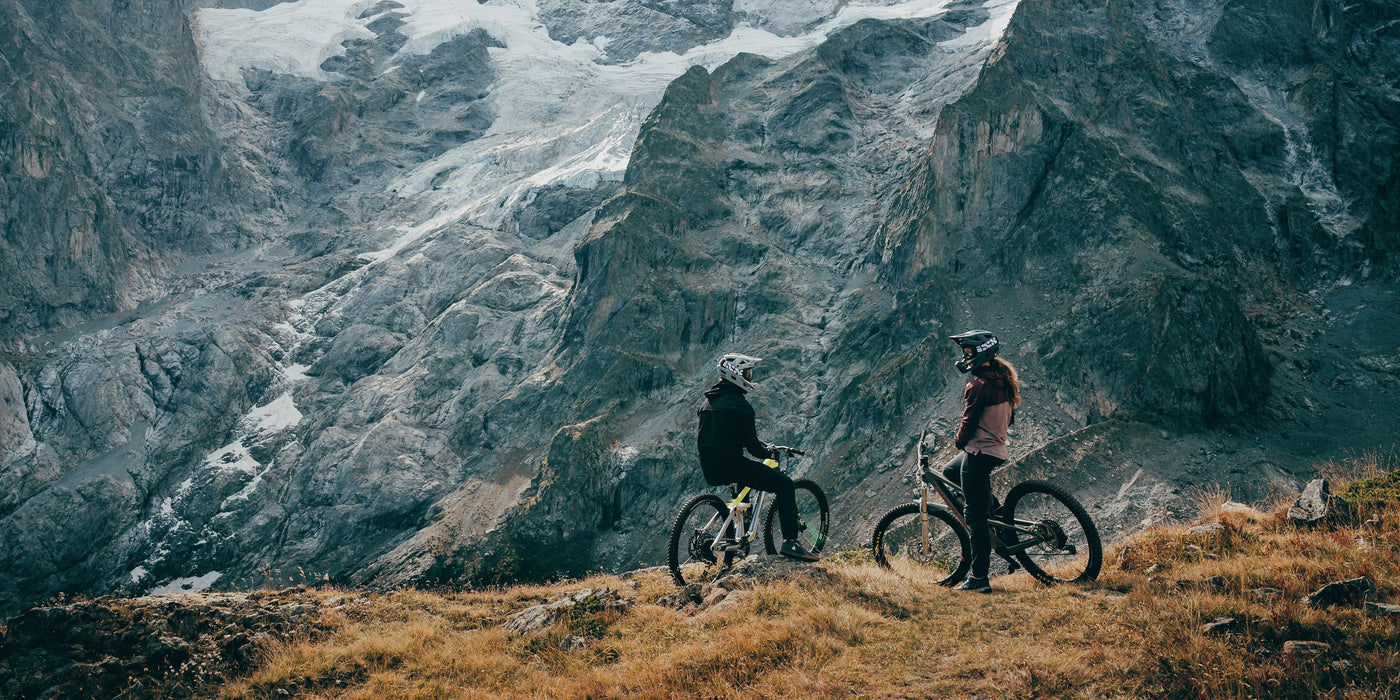
Does a half-shell helmet provide sufficient protection, or is a full-face helmet necessary? Here you will find the most important facts at a glance to help you make the right choice for every situation.

Full-face vs. half-shell
The half-shell helmet is the classic choice: lightweight, comfortable and ideal for protection in low-speed falls. Full-face helmets, on the other hand, offer additional protection for the chin and face thanks to their closed design – even if half-shell helmets are often considered more comfortable.
| Half-shell helmet | Full-face helmet | |
|---|---|---|
| Protection coverage and safety factor | Back of the head, sides and crown Provides effective protection in falls on flat, less technical terrain and at lower speeds. |
Back of the head, sides, crown, chin, jaw, cheeks and temples Extended protection for serious crashes, jumps, technical terrain and higher speeds. |
| Weight and ventilation | Lightweight and well ventilated, face remains open. | Heavier, ventilation varies depending on the model. |
| Field of vision and freedom of movement | Unrestricted movement and full field of vision. | Chin guard slightly limits movement. Field of vision is somewhat reduced. |
| Areas of use | Everyday riding, road, touring, trails | Trails, enduro, downhill, bike park |

When is a full-face MTB helmet worthwhile?
The choice of helmet depends on your riding style. Safety always comes first, but the right helmet depends on where, under what conditions, and with what level of risk you are riding.
For riders who go on long tours or ride leisurely on easy trails, a half-shell helmet is perfectly adequate. The comfort of this helmet design is particularly noticeable on longer distances.
The situation is different if you like to push yourself to the limit and test your boundaries. In this case, you should not forego the additional safety of a full-face helmet—especially when downhill riding or in bike parks, where the risk of a fall is significantly higher.
There are also differences within the downhill helmet range: the Trigger FF is an ultra-lightweight helmet, while models such as the Xult are more robust and better padded.
MTB full-face helmets
View all-
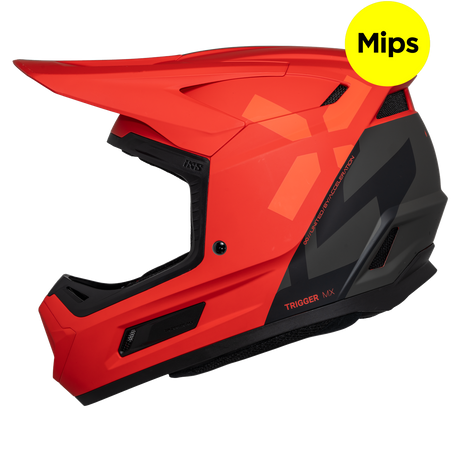

Trigger MX 1.0 Graphic MIPS full face helmet - matt red-black
€229,00 EURUnit price /UnavailableIn stock -


Trigger MX 1.0 Chalky MIPS full face helmet - matt metallic black
€199,00 EURUnit price /UnavailableIn stock -


Trigger MX 1.0 Graphic MIPS full face helmet - matt black-orange
€229,00 EURUnit price /UnavailableIn stock -


Trigger MX 1.0 Graphic MIPS full face helmet - grey-black
€229,00 EURUnit price /UnavailableIn stock -

 €289,00 EURUnit price /Unavailable
 -
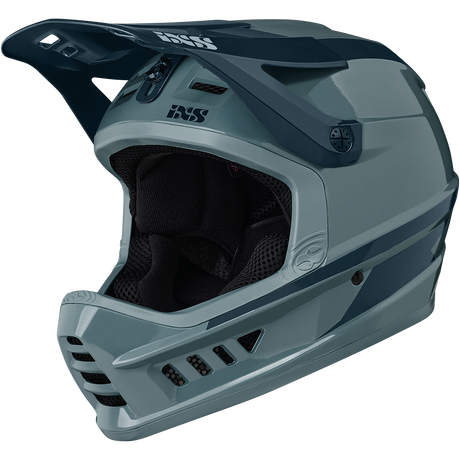
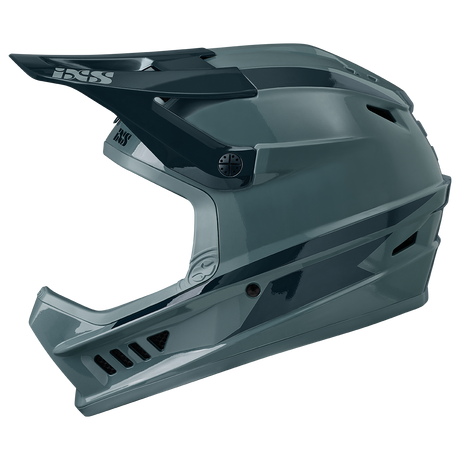 Up to 10% offFrom €152,10 EUR
169,00 €Unit price /UnavailableML (57-59 cm) LXL (60-62 cm) -
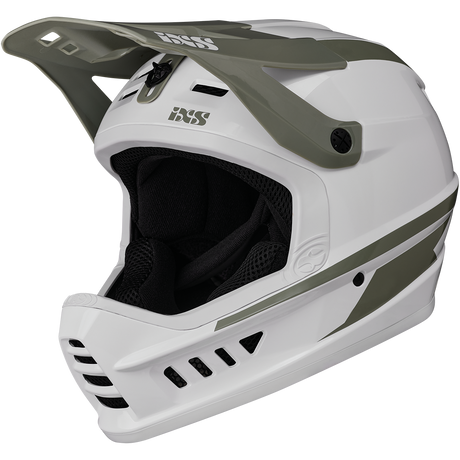
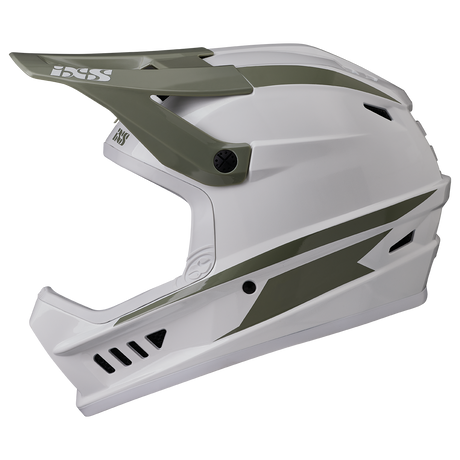 €169,00 EURUnit price /Unavailable
 -
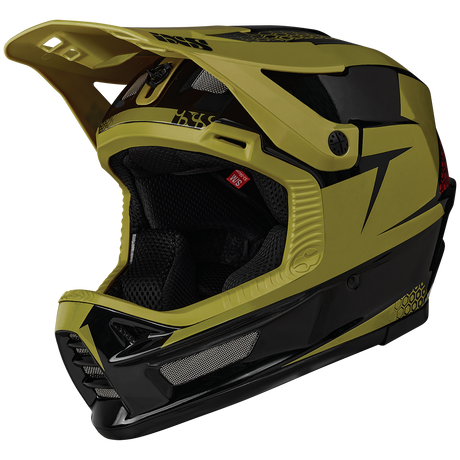
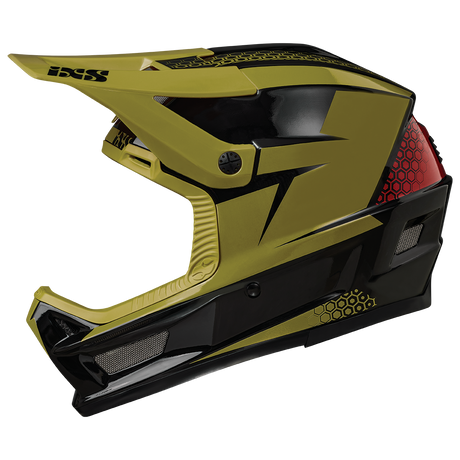 Up to 5% off€331,55 EUR
349,00 €Unit price /UnavailableSM (53-56 cm) LXL (60-62 cm)


Mips® helmets
At iXS, all helmets are also available with the MIPS® safety system. This proven effective system offers increased protection against rotational forces and is now standard on modern helmets.
MIPS (Multi-directional Impact Protection System) is a protective system for helmets that reduces rotational forces in oblique impacts. A movable intermediate layer allows the helmet to rotate slightly relative to the head, reducing the risk of brain injuries such as concussions.

X-Frame
An integrated frame is embedded in the EPS material of the helmet, providing additional stability. This X-Frame forms the core of the construction: the EPS is moulded in one piece around the X-Frame, giving it the necessary strength without significantly increasing its weight. The entire X-Frame system is a patented in-house development by iXS.
Discover all iXS helmets here.
-

MTB full-face helmets
Maximum protection for risk-taking riders on technical and fast trails. So that your face is well protected even in the event of a serious fall and you can explore your limits without worry.
-

MTB open-face helmets
Comfortable yet protective. If you are looking for a lightweight helmet with maximum ventilation and no restrictions on mobility or field of vision, you have come to the right place.


In conclusion, one thing is clear: all our helmets are safe and offer you good protection.
Take your time and see for yourself.
Ride safely. Ride boldly. Ride iXS.

